Monday, 13 November 2017

Jill McCorkel - The Profit in Loss: Metamorphosis and Adaption of the Private Prison Industry

Last week Jill McCorkel joined us to talk about her new research on prison privatisation in the US, specifically the growth of privatised drug treatment. Jill is Associate Professor of Criminology and Sociology at Villanova University in Philadelphia, and has just finished up a research period as Visiting Scholar in the Sutherland School of Law at UCD. Previously, Jill has published on the impact of the War on Drugs on women's imprisonment in the US. Her 2013 book from NYU Press, Breaking Women: Gender, Race and the New Politics of Imprisonment, details her extensive ethnographic research in this area.

More recently, Jill has been examining the increase of privatised carceral drug treatment, and she has explored how companies 'sold' treatment and rehabilitation to states that were determinedly 'get tough'. We discussed Jill forthcoming articles on this topic, including 'The Second Coming' (2018, Contemporary Drug Problems) and 'Banking on Rehab' (2018, Studies in Law, Politics and Society).

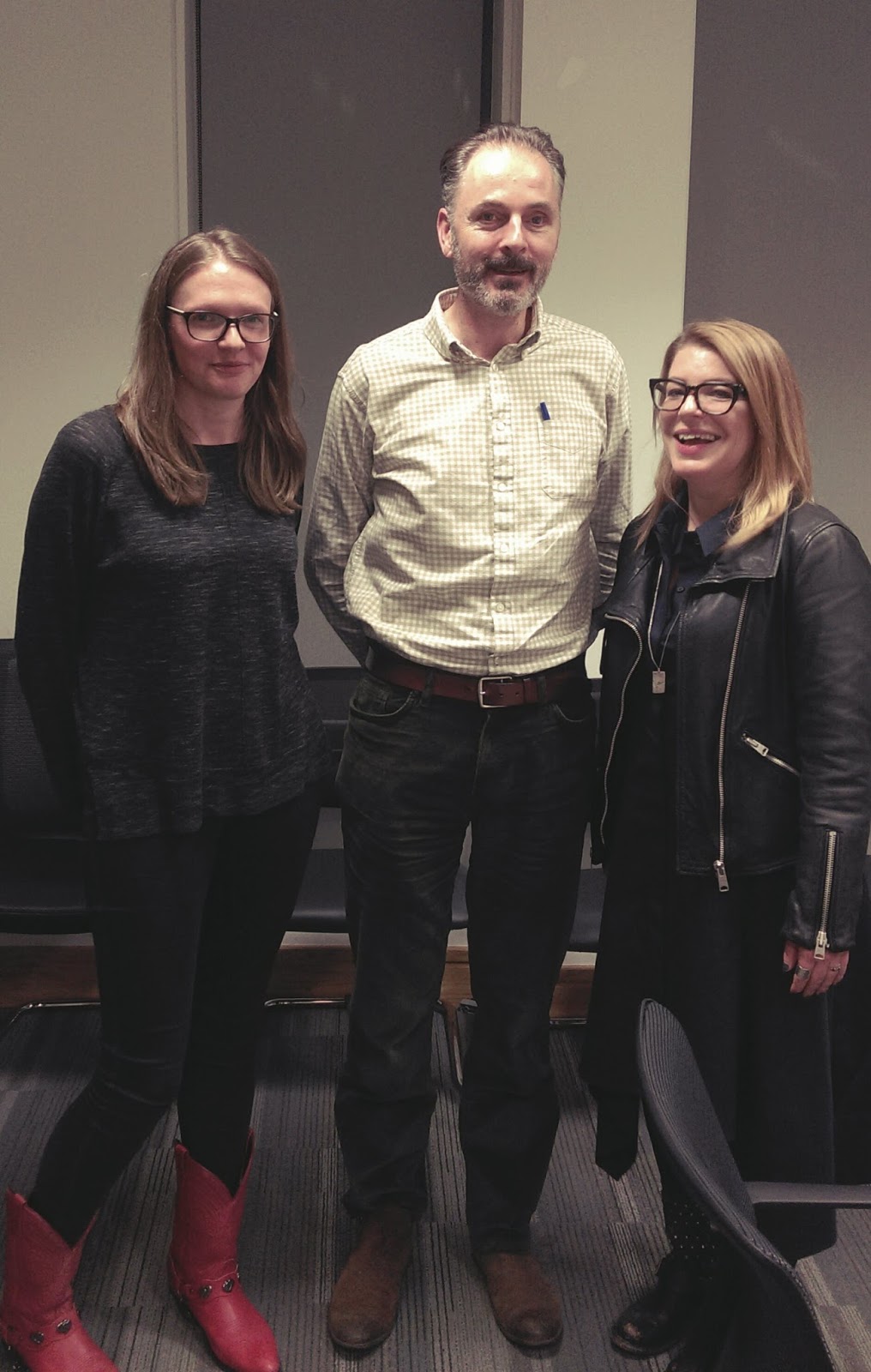
Lynsey Black, Ian O'Donnell & Jill McCorkel at The DA!
Jill spoke about her research on prison privatisation, arguing that for most people this term translates easily to 'private prisons', however this meaning has neglected the increasing privatisation of services within the prison setting. Jill argued that the provision of correctional and prisons-related services was an incredibly lucrative venture, netting billion dollar profits for correctional companies, and a revenue stream that avoided many of the risks that building and operating an entire prison entailed. While companies such as CoreCivic and others faced significant pressures to make profits, especially after lawsuits and escapes, providing services such as carceral drug treatment carried less risk as well as an opportunity to maximise profits.

Jill's research demonstrates how specific models and definitions of addiction could be utilised to increase potential profits. She cited a particular focus on a traditional 'disease-oriented' conception of addiction as situated at the level of the self, without consideration of an individual's circumstances. Under this paradigm, the recidivism of drug-using offenders was not 'failure', rather it merely demonstrated the accuracy of the original diagnosis.

Jill's research also offered insight into how gendered and racial hierarchies and conceptions of 'dangerousness' were mobilised by correctional companies. Citing Sarah Haley's exploration of gender and Jim Crow, No Mercy Here, as an historical precursor, Jill noted that African American women prisoners were constructed under a familiar racist trope of Black women as 'less feminine' than White women. Jill argued that drug treatment was sold as an appropriate service for male prisoners based on a very misleading argument that it had been successful with African American women.

Jill's research takes a close look at an under-explored facet of prison privatisation in the US - arguing for a more expansive approach to how we understand 'privatisation'. Her recent articles on this topic, a trio of pieces which examine what this means for mass imprisonment in the US and the future of punishment in the US, are essential reading for any scholar of punishment.

Friday, 20 October 2017

AUTHOR EVENT with Jill McCorkel: The Profit in Loss: Metamorphosis and Adaption of the Private Prison Industry

Jill McCorkel is Associate Professor of Sociology and Criminology at Villanova University. She is currently a Visiting Scholar at the Institute of Criminology and Criminal Justice at University College Dublin. Jills research investigates the social and political consequences of mass incarceration in the United States. She focuses primarily on how law and systems of punishment perpetuate race, class, and gender-based inequities. In 2014, she received the Distinguished Scholar Award from the American Society of Criminology Division of Women and Crime for her research in these areas. Her book, Breaking Women: Gender, Race, and the New Politics of Imprisonment (New York University Press, 2013), explores the consequences of the War on Drugs and "get tough" policies for women prisoners. Her book was selected by the Society for the Study of Social Problems as one of five finalists for the prestigious C. Wright Mills Award.

The Differential Association is very happy to have Jill joining us for a discussion about her recent work on private prisons in the United States. We will be discussing Jill's recent article in Contemporary Drug Problems, 'The Second Coming.'

Details!
Date: Thursday 9th November
Time: 5pm to 6.30pm
Venue: The Green Room, Sutherland School of Law, UCD (L021)

To attend the book club and for a copy of the reading material, please RSVP to Lynsey Black (lynsey.black@ucd.ie).

For an overview of Jill's work on the private prison industry:

In August 2016, the Department of Justice announced plans to phase out contracts with private prison companies with the goal of eliminating private prisons in the federal system altogether. For many scholars and prisoner rights advocates, the announcement was an important step in dismantling the prison industrial complex. However, this perspective obscures the extent to which the largest for-profit prison companies have broadly diversified the services they offer to federal, state, and local municipalities and, concomitantly, the source of carceral profits. In a series of articles, Dr McCorkel traces the rise and growing popularity of one of the largest of these for-profit services -- drug treatment. Although rehabilitation was once considered an antidote to mass incarceration and the prison industrial complex, it now fuels the growth of private prison companies and serves as a bedrock of profitability, even in a time of declining prison populations. 

Tuesday, 28 February 2017

Carceral Geography by Dominique Moran

This March the DA will be reading 'Carceral geography and the spatialities of prison visiting: visitation, recidivism, and hyperincarceration', by Dominique Moran (2013), from Environment and Planning D: Society and Space, Vol.31, 174-190.

Abstract:
Geography, as a disciplinary lens, brings a valuable perspective to the study of the carceral, and carceral geography’s concern for the spatial could provide a new explanatory perspective to the consideration of some accepted tenets within criminology, whilst at the same time offering a productive and useful ‘grounding’ of contemporary geographies of emotion and affect. In the context of hyperincarceration and the carceral continuum of recidivism and repeated reimprisonment, this paper considers the long-observed relationship between prison visitation and reduced recidivism, posits prison visiting rooms as underresearched carceral spaces, and develops theoretical and methodological innovations which nuance the understanding of prison visiting.

Details:
When: Wednesday 29th March at 6pm
Where: Back room of Mulligan's Pub on Poolbeg Street, Dublin 2

Tuesday, 14 February 2017

Dr Matt Bowden at the DA

Last night we welcomed Dr Matt Bowden, Senior Lecturer at Dublin Institute of Technology, to speak about his book 'Crime, Disorder and Symbolic Violence'. The event was held in the Sutherland School of Law, University College Dublin, and we had a great turn-out to hear Matt speak.


Biscuits by Colette!

DA feast, white wine chilling...

Tuesday, 3 January 2017

Author Event - Crime, Disorder and Symbolic Violence by Matt Bowden

Dr Matt Bowden, Senior Lecturer at Dublin Institute of Technology, will be discussing his recent book Crime, Disorder and Symbolic Violence: Governing the Urban Periphery (Palgrave Macmillan, 2014) at the next meeting of The Differential Association.

Matt has previously blogged about this work for the Irish Criminology Research Network.

Crime, Disorder and Symbolic Violence employs theories and concepts developed by Pierre Bourdieu and examines the problems of the urban periphery, specifically in the context of Dublin's new urban 'edges', the vast surplus of labour which ringed the city following huge shifts in Ireland's industrial landscape. Matt argues in his book that the state devolved dealing with the crisis to the Department of Justice, as the state sought to govern through symbolic violence.

Matt will discuss this work at the author event, which will be followed by a Q&A session, and a small reception.

Information

The author event will be held on Monday 13th February at 6.30.

The event will be held at the Sutherland School of Law, University College Dublin.

The 39A Dublin Bus from Dublin City Centre (from stops at D'Olier Street, Nassau Street etc) drops you off a few minutes walk from the School of Law).

Please RSVP to lynsey.black@ucd.ie

Thursday, 3 November 2016

Xmas DA!

This Xmas, the DA will be sitting down before an open fire to read and discuss Elaine Fishwick and Heusen Mak's Crime Media Culture article 'Fighting Crime, Battling Injustice: The World of Real-Life Superheroes'.

Elaine Fishwick, of the University of Western Sydney, examines the lives of those 'real-life superheroes' who pursue campaigns of justice adopting the guise of fictional archetypes.

Abstract:
This article explores the motivations, actions and experiences of real-life superheroes, those individuals who adopt a superhero persona inspired by both comic books and films, to engage in a range of activities that involve, amongst others, fighting crime, providing community support and battling injustice. Drawing on 13 in-depth interviews with individuals from different countries, as well as an ethnographic content analysis of online material, this innovative research explores the merging of the fictional and the real, the virtual and the terrestrial in the lives of interviewees. The article also enriches our understanding of the ‘carnival of crime’ and ‘edgework’ by arguing that risk, pleasure, excitement and transgression can also be found in a carnival of ‘doing good’ as well as in ‘wrongdoing’.

Details!
The Xmas DA will take place on Wednesday 14th December, at 6.30, in the Library Bar of the Central Hotel - Exchequer Street, Dublin 2.

Sunday, 19 June 2016

Prisoners, Solitude and Time

On the evening of Tuesday 14th June, Professor Ian O'Donnell of UCD kindly stopped by The Differential Association, holed up in the Law School of Trinity College for a change, to discuss his new book, Prisoners, Solitude and Time (2014).

Prisoners, Solitude and Time represents the culmination of a decade of work. Ian spoke of an initial idea, in 2004, which he had worked on intermittently, including periods spent on research leave in the United States.

The book explores how prisoners experience, and cope with, prolonged periods of imprisonment, with a particular focus on how prisoners respond to solitary confinement. The work draws on a huge range of material to answer these questions; venturing beyond the criminological, it incorporates accounts of polar and space exploration, wilderness narratives, and tales of isolation and endurance from persons drawn from a diverse selection of backgrounds, to offer an expansive look at the human spirit in adverse conditions. The work also links to the experience of isolation for religious purposes and the solitude of many within religious vocations. In addition to these writings, Professor O'Donnell uses a great many prison memoirs to examine the lived experience of those who have spent long periods of time locked up without everyday human contact.

Prisoners, Solitude and Time offers a number of carefully researched subject-areas for consideration. The book begins with a revisionist take on the history of the separate and silent systems imposed during the 1800s at Cherry Hill and Auburn in the US. Ian writes that the effects of these systems were neither so total, nor so devastating, as critics demanded. In this vein, the book looks particularly at the excoriating account written by Charles Dickens following his visit to Cherry Hill, and notes the public outcry that ensued, and the eventual fall from favour of the separate/silent systems in the UK and the UK.

The book also offers a genesis of the use of 'administrative solitary', now an embedded feature of the US penal system. These chapters offer the fascinating history of 'supermax' (variously labelled depending on the state), tracing it back to prisoner zero, Thomas Silverstein, who murdered a prison officer while at Marion, Illinois, in 1983.

Finally, Prisoners, Solitude and Time, offers insights into how time can be theorised within a prison context and offers perspectives on the subjectivity of time from a range of disciplines. Professor O'Donnell, acknowledging his avowed admiration of alliteration, elaborated the 7 R's of 'doing time' in prison, or as he noted, the seven survival secrets of successful solitaries:

  • Rescheduling (live by prison time)
  • Removal (remain busy)
  • Reduction (e.g. prolonged sleep)
  • Reorientation (live in the extended present)
  • Resistance (including violence)
  • Raptness (absorption in skilled work)
  • Reinterpretation (imposing a greater meaning, e.g. religion/spirituality)

Prisoners, Solitude and Time offers examples of persons who have drawn on deep personal reserves of strength to withstand, and flourish, in the adverse conditions of solitary confinement. However, Professor O'Donnell is careful throughout to underline his belief that the use of solitary confinement remains an inhumane practice. Demonstrating the impact of the work, Professor O'Donnell was recently an expert witness in the extradition hearing in Ireland of Ali Charaf Damache, who is wanted in the US to stand trial for terrorism offences. Damache faces up to 45 years in prison if convicted. The book, therefore, does not offer a ground of argument for those in favour of solitary confinement, rather, it examines the experiences of those who have resisted its negative effects, while also offering a nuanced account of its development. The book concludes with the observation that while solitary confinement was initially envisaged as a means to an end (the salvation and moral recovery of the prisoner), it now serves as an end in itself, something which speaks to the cynicism of current US penal ideologies.

We'd like to thank Professor O'Donnell, and all those who came along, and contributed to the discussion afterwards!

Due to a failure in remembering to photograph the event, the below offers some idea of the baked good-goodness of the evening.
Lemon Drizzle cake, a la Colette

Wednesday, 18 May 2016

'Tactics', Agency and Power in Women's Prisons by Abigail Rowe

The DA recently read Abigail Rowe’s BJC article, ‘‘Tactics’, Agency and Power in Women’s Prisons’. The article was based on ethnographic research and semi-structured interviews conducted in two women’s prisons in England. Rowe writes that women’s agency has traditionally been framed in terms of resistance, and their coping strategies have generally been considered in the context of inter-personal relationships. In contrast to this approach, Rowe focuses on how agency can manifest as problem-solving, and how women engage with the power of penal regimes.

Rowe explores how prisoners and staff manage the constraints of the prison environment, and divides her findings into the issues of: visibility and discipline, dependency and hierarchy, and staff tactics of ‘lending’ and ‘poaching’. These latter terms are taken from Certeau (1984), whose theory Rowe uses to good effect throughout in her explication of agency and power. Rowe writes that Certeau’s ideas emerged in response to the monolithic, everywhere and nowhere, accounts of power proposed by Foucault in Discipline and Punish (1977). Certeau’s work concentrates on how those with limited power navigate these structures. The concept of ‘poaching’ in this context refers to ‘The subversion of a system to fulfil a private goal’ (at 337). Using Certeau’s ‘tactics’, Rowe's research adds to the complexity of the concept of the post-disciplinary prison.

Surveillance and Visibility

Rowe highlights the ‘very public nature of prison living’ (335) and the repercussions of this for relationships. For example, disagreements between prisoners can quickly be escalated and officially labelled as bullying. Although this is a protective mechanism, it is also a label with harsh outcomes for the individual accused of bullying.

Rowe offers examples of poaching which demonstrate how the systems of power in penal regimes can be exploited by prisoners for their own ends. Institutional mechanisms, such as the official response to bullying, can be used by prisoners to satisfy their own goals. The example is offered of one prisoner who was moved to another wing after false allegations of bullying were made against her. Rowe brands this a ‘tactic’, whereby other prisoners on the wing achieved their desired outcome through use of existing systems.

The DA noted that the necessary structure of complaint mechanisms, which in Rowe’s terms created points of invisibility as well as hypervisibility, was one of the primary areas of conflict and tension within prison, for prisoners and staff. It was noted by the group that certain allegations can effectively ruin the careers of staff, and can prejudice the release prospects of prisoners. This use of penal systems for personal ends therefore offers an effective example of ‘poaching’.

Dependency and Hierarchy

The dependency of prisoners on staff, and the hierarchy of the prison, offered another opportunity for the use of ‘tactics’. While the inequality of prison regimes can be disguised when all goes well, any resistance reveals its true nature.

The DA noted that within this fragile environment, prisoners are just as engaged in the business of affective labour as prison officers. Rowe reported numerous instances recounted by prisoners of how they managed the moods of staff, including stories of how they indulged the jokes of staff, and sussed them out as to their current mood.

Contrasting readings of the same incident were also notable, especially with regard to the women’s stated need to repeatedly ask, sometimes asking multiple staff members, to ensure that basic requests were carried out. This demonstrated starkly the dependency and prison hierarchy. However, prison staff perceived this very differently, as annoyance and as potentially humiliating if women went above their heads to request something. However, incorporating Goffman’s (1963) concept of ‘spoiled identities’, Rowe noted that repeated asking was a ‘tactic’ women used to ensure that simple needs were catered to. The DA discussed how women prisoners are perceived as a needier cohort than male prisoners, however from this perspective the stated and restated needs can be reframed as a means of achieving an outcome that might not otherwise happen.

Staff Tactics: ‘lending’ and ‘poaching’

Rowe’s research also looked at how staff resorted to strategies in the prison environment. However, throughout, staff members’ position as agents of power within the prison was noted. One staff member, who recounted that her attitude towards rude prisoners was framed by knowing that they would need her sooner or later, was quick to state that this ‘wasn’t necessarily a power thing’. The DA noted the lack of reflexivity in these attitudes. However, they also pointed to the powerlessness felt by many prison staff, who were often seen as unloved cogs in the penal machine, slotted between the management and the prisoners. The comments of staff offered in this section were fascinating, and could have provided material for an article on this subject alone.


In summary, Rowe states that she has sought to investigate and explicate the ‘relational, intersubjective dynamics through which penal regimes are delivered and negotiated’ (346). The article offers an alternative approach to theorising the experience of women prisoners. The use of Certeau's framework, and in particular the notion of 'poaching', offered considerable insight into how the institutionalised power in prisons can be adapted for prisoners' needs. The offering of this different theoretical slant on prison research provided new perspective on how individuals navigate within broader theories of the structure of power.

Thursday, 12 May 2016

AUTHOR EVENT: 'Prisoners, Solitude, and Time' by Ian O'Donnell

The Differential Association is delighted to announce that our next book club meeting will be an author event, with Professor Ian O'Donnell of University College Dublin.

Professor O'Donnell will be talking about his new book, Prisoners, Solitude, and Time, which will be followed by a general group discussion of the themes and ideas in the work. For a description of the book, see below, the first chapter is also available from the above link.

The event will be followed by a small wine reception.

To register, please email Lynsey Black at lblack@tcd.ie

Details
Date and Time - Tuesday 14th June at 6pm
Venue - School of Law, Trinity College Dublin (the School of Law is located at House 39, New Square, on the main TCD campus, see map for details)


Prisoners, Solitude, and Time
Examining two overlapping aspects of the prison experience that, despite their central importance, have not attracted the scholarly attention they deserve, this book assesses both the degree to which prisoners can withstand the rigours of solitude and how they experience the passing of time. In particular, it looks at how they deal with the potentially overwhelming prospect of a long, or even indefinite, period behind bars.
While the deleterious effects of penal isolation are well known, little systematic attention has been given to the factors associated with surviving, and even triumphing over, prolonged exposure to solitary confinement. Through a re-examination of the roles of silence and separation in penal policy, and by contrasting the prisoner experience with that of individuals who have sought out institutional solitariness (for example as members of certain religious orders), and others who have found themselves held in solitary confinement although they committed no crime (such as hostages and some political prisoners), Prisoners, Solitude, and Time seeks to assess the impact of long-term isolation and the rationality of such treatment. In doing so, it aims to stimulate interest in a somewhat neglected aspect of the prisoner's psychological world. The book focuses on an aspect of the prison experience - time, its meanderings, measures, and meanings - that is seldom considered by academic commentators. Building upon prisoner narratives, academic critiques, official publications, personal communications, field visits, administrative statistics, reports of campaigning bodies, and other data, it presents a new framework for understanding the prison experience. The author concludes with a series of reflections on hope, the search for meaning, posttraumatic growth, and the art of living.

Monday, 11 April 2016

'Tactics', Agency and Power in Women's Prisons

Following some months off to attend to pressing PhD business, The DA is making a comeback with a meet-up in May to discuss Abigail Rowe's recent article in the British Journal of Criminology, 'Tactics', Agency and Power in Women's Prisons.

Everyone welcome!

Date: Tuesday 10th May
Time: 6pm
Venue: Mulligan's Pub (we're usually in the back room) (Dublin 2, Poolbeg Street)

Please feel free to get in contact to be included on future mailing lists! Alternatively tweet to @blalygamal for more information.

Monday, 22 June 2015

Orange is the New Black - S3!

The Differential Association is plunging into the world of Orange is the New Black yet again this summer to discuss season 3 of the phenomenally successful Netflix show. In the summer of 2014, we discussed the first two seasons, and this August we're returning to discuss the story so far.

In the interim, Orange is the New Black has spawned its own mini-industry, with seminars devoted to it, and with an exciting array of research which takes the show as its starting point; this research is coming from the fields of media studies, gender/queer studies, critical race studies and criminology and criminal justice issues.

This makes the release of the third season a really pertinent time to get together and discuss how the show is progressing, how characters are developing AND to discuss the reaction to the show as well.

Everyone is welcome! If you missed the first DA on the show, come along and partake in the second.

Date: Wednesday 26th August
Time: 6pm
Venue: Mulligan's on Poolbeg Street - distressingly, the door to the back room has been REMOVED. We shall struggle on, make and mend.

Monday, 30 March 2015

Death and Furniture - the DA talks epistemology

On Wednesday 29 April, The Differential Association will be discussing Edwards, Ashmore and Potter's 'Death and Furniture'. The article is a reflection on realism versus relativism and the arguments for and against social constructionism.

As well as discussing the questions of epistemology that this article throws up, we will also be applying these questions to our own research and experience, so that we can consider the theoretical preoccupations in light of tangible questions emerging in relation to understandings of crime and punishment.

When: 6pm Wed 29 April
Where: Mulligan's Back Room

Edwards, D., Ashmore, M. and Potter, J. (1995) 'Death and Furniture: The Rhetoric, Politics and Theology of Bottom Line Arguments Against Relativism', History of the Human Sciences, 8(2), 25-49.

Thursday, 12 March 2015

Filler Elevator Music...

The Differential Association has been AWOL for some months now. Its winning mix of light-hearted banter, deep criminological ponderings and devotion to holding monthly meet-ups in Dublin pubs has no doubt been much missed.

There has been a very good reason for its prolonged absence.

Members of the DA have been beavering away tirelessly behind the scenes to arrange a conference in which a lot of what happens at our monthly meetings will take place on a larger scale.

On Friday 27 March, the inaugural Irish Postgraduate Criminology Conference will be held. The conference is being co-hosted and funded by Dublin Institute of Technology, and the School of Law at Trinity College Dublin. It will bring together dozens of postgraduate researchers in the fields of criminology and criminal justice, criminal law, historical perspectives on crime and many others, to provide a space for research, both Irish and international.

The invited speakers at the conference are Professor Ian O'Donnell, of University College Dublin, Professor Eamonn Carrabine of the University of Essex and Dr Claire Hamilton of NUI Maynooth. We feel hugely honoured to host these speakers, especially as each has authored a text which at one time was the selected reading material of a monthly meet-up!

Normal service will resume for all those criminology discussions following the conference!


Wednesday, 17 December 2014

Democratising Punishment by Julian V Roberts and Jan de Keijser

Julian V Roberts and Jan W de Keijser (2014) ‘Democratising Punishment: Sentencing, Community Views and Values’, Punishment and Society, 16(4), 474-498

How far should public involvement in punishing criminal wrongdoing be facilitated? A recent movement towards greater participation from the ‘lay’ public has suggested that these voices are lacking in the criminal justice system as it is currently conceptualised. Those in favour of this movement towards ‘Democratising Punishment’ have argued that a crisis of legitimacy is impending as decision-making in criminal justice matters becomes ever more divorced from ‘common-sense’.

In light of this, one of the key rationales put forward by the democratising punishment scholars, the notion of ‘common-sense’, presents itself for examination. It is hard not to think of Gramsci’s view of common-sense as ‘a reservoir of historically discontinuous and disjointed ideas that functions as the philosophy of non-philosophers’ which suggested that it was hardly the wise arbiter it often purported to be (In Selections from the Prison Notebooks of Antonio Gramsci 1971).

In their forcibly articulated argument Roberts and de Keijser critique, and in turn, criticise the models of participation and rationales proposed by advocates of the democracy in punishment movement.

As Lon Fuller articulated, through the person of Justice Handy, in ‘The Case of the Speluncean Explorers’, the place of public opinion in justice has been a recurring question in legal circles:

‘I have never been able to make my brothers see that government is a human affair, and that men are ruled, not by words on paper or by abstract theories, but by other men. They are ruled well when their rulers understand the feelings and conceptions of the masses. They are ruled badly when that understanding is lacking.

‘Of all branches of the government, the judiciary is the most likely to lose contact with the common man.’

Fuller presented Justice Handy as entirely swayed by the ‘common-sensical’ views of the public, as revealed to him through opinion polls in newspapers; Handy used this evidence to solve the difficult case at hand, namely the saving of four men accused of murder (the case is worth a read, and it makes great dinner party/pub banter).

Interestingly, given the concerns of democratising punishment advocates about the apparent disconnect between the people and the courts, Ireland’s highly discretionary system would surely provide acute cause for concern. It ensures that there is even less input from democratically elected persons, while tools such as sentencing guidelines, for example, are not a feature of this jurisdiction.

Advocates of democratising punishment extol the virtues of community involvement. One issue not explored at length in Roberts and de Keijser’s article however is the assumed homogeneity of ‘community’ which must necessarily underpin these treatises. The concept of the ‘community’ in each of the models of participatory justice is presented without nuance or discussion of what this nebulous term actually consists. Using a vague term such as 'community' also serves to glorify and romanticise the idea of lay participation, in a manner which becomes difficult to sustain when subjected to scrutiny. The direct participation of ‘community’ in this abstract form would inevitably incorporate the discrimination and inequity of society; currently within a professionalised criminal justice system there is the veneer of equality and neutrality. This is allied to the dangers of a reduction in transparency and accountability, as laypersons would not be held accountable to the same extent as professionals acting within carefully determined parameters. The entire debate suggests that a key question must be answered - is dispassionate deliberation a desired trait in decision-making? If this is not agreed on, then proportionality and principled sentencing make way for emotive and expressive justice. The argument put forth by 'Democratising Punishment' advocates that sentencing is ‘dysfunctional’ is interesting in this vein. ‘Dysfunctional’ how? In reality, this appears to mean lenient. Therefore, public participation in sentencing poses a risk of increasing punitiveness in the form of longer sentences, with the resultant rise in prison populations and expense.

Following on from the uncertain concept of 'community', even juries in many jurisdictions, including Ireland (see the Law Reform Commission report on this), are rarely representative, inevitably showcasing a selection of society skewed towards certain sub-groups. The small proportion of criminal cases which end in a jury trial is also regularly glossed over in the fiction of the jury trial as the cornerstone of the legal system. The valorising of the jury trial also sits uneasily with calls for greater expert juries or calls for a complete absence of jurors, for example in sexual offence cases or in cases of financial complexity deemed particularly specialised.

The question of how public reactions are to be gauged is also problematic. The equation of a media with a public reaction raises issues of causation. To what extent can a media reaction be viewed as reflective of a public reaction? In Ireland, an intense media reaction to the Lavinia Kerwick case in the early 1990s led to the Criminal Justice Act 1993 in which victims were given an opportunity, through the use of victim impact statements, to express in court how the crime had impacted them. However, the untangling of genuine public disquiet from media noise is difficult to quantify and assuming that media reactions are a proxy for public opinion can have the paradoxical effect of shutting the public out of debate.

Ultimately, the democratising punishment argument appears to locate the citizen as consumer, and to prioritise concerns of getting value for ‘your’ money; a sleek criminal justice system, incorporating Points of View-style feedback, is envisaged. The question of how great the want is among the public to assume their starring role in the administration of justice is debatable, for example the record low turn-out at the elections for Police Commissioners in England and Wales, which suggested a tokenistic exercise in devolving power to a people who had little interest. Over the previous two centuries, civil society gradually gave up its role in the punishment of offenders, it is questionable to what extent it has the desire and capacity to participate in a meaningful way.

Ultimately, The Differential Association suggested that education and information campaigns targeted at the public may offer a more feasible means of incorporating public acceptance of criminal justice processes. Those present discussed the possibility of televising trials, for example The Murder Trial (aired by Channel 4) and the blanket coverage of the Oscar Pistorius homicide trial, both presented opportunities to assess how such a proposal could work in practice. However, inevitably, the entertainment imperatives and the danger of misleading editing presents issues of ethics, exploitation and sensationalism.

What is lost in the literature calling for greater democratisation is the idea that professionals in the criminal justice system are citizens; they are merely citizens that have been tasked with acting impartially and to the best of their ability according to pre-set parameters. Further, judges are already to an extent influenced by public opinion in sentencing. Arguably, the use of restorative justice practices are already an attempt to introduce the community into the criminal justice process, as is community policing.

Finally, justice cannot be devolved as a discrete area which operates without reference to other areas of policy-making. The criminal justice system comprises one part of a symbiotic relationship with other areas of policy and politics such as welfare and education. Should public participation extend to these diverse other areas? To consider criminal justice policy in isolation merely perpetuates the use of its institutions and agencies as a catch-all for failures elsewhere in society.

Roberts and de Keijser have presented a sharp critique of the main arguments for 'democratising punishment'; the article is written in an informal and colloquial style, and the arguments are concisely and convincingly stated.
Friday, 7 November 2014

'Policing Sexting' by Lara Karaian

The law is continually called upon to address emerging issues of concern arising from technological advances. The increasingly ubiquitous use and ownership of smartphones has presented its own novel catchment area of behaviours, including the neologism of ‘sexting’, the taking and sending of sexual images electronically. This year saw a high-profile news story in which the hacked, stolen and leaked images of celebrities, mostly women, were published online. This news story helped publicise some of the issues around ‘sexting’ and has brought the practice to general public consciousness. In England and Wales recently, so-called ‘revenge porn’, the distribution of explicit images without the consent of the subject, is to be enshrined as a criminal offence, carrying a maximum penalty of two years in prison. In the brave new world of smartphones therefore, law enforcement and legislators are grappling with issues of security and privacy. However, the rise of the smartphone has also ushered in child protection fears.

Lara Karaian, in a recent article for Theoretical Criminology, explores the discourses around ‘sexting’ and teen online safety. Using the real-world example of a Canadian public service campaign designed to educate teenagers on the harms of the internet and ‘sexting’ in particular, she sets out her task: ‘to expose how antisexting initiatives that reify and mobilize a culture of sexual shame in order to responsibilize certain girls for their own, and others’, safety constitute meaning-making projects that reproduce and reify gendered, racialized, classed and hetero-normative ideas of sexual value, propriety, privilege and blameworthiness.’ (284)

Since the advent of the internet as an everyday tool for many people, accessible to greater numbers of households worldwide, a rumbling about its pernicious effects on children has been palpable. Hanna Rosin, in a recent article in The Atlantic, highlights the difficulty in pitching a response to the teen behaviour of sexting, and documents attempts, of varying degrees of success, to develop responses. The concerns about children and the dangers of internet usage can be added to the legacy of ‘respectable fears’ outlined by Pearson (1983).

In her article, Karaian draws on Garland’s (1996) theory of responsibilization, put forward in ‘The Limits of the Sovereign State’, to suggest that teenage girls are being made responsible for their own sexual safety, and for the criminalisation of their peers who may redistribute images. Karaian locates the Canadian campaign within an identified tendency to blame women for their own victimisation; Karaian quotes one US police officer who rationalises the decision to focus on female behaviour with regard to ‘sexting’, to the effect that, ‘without her [the girl] there would be no crime’ and provides further contemporary relevance by citing the discourse evident during the ‘Steubenville Rape Trial’ which concentrated on the blighted futures of promising young men rather than the wrong they had perpetrated.

The Canadian ‘anti-sexting’ campaign was targeted particularly at teenage girls and appeared to tap into the informal social control mechanism of shame. The focus on teenage girls underlined a societal emphasis on the purity and virginity of this group; innocence was therefore understood as an identifiable form of social capital for a teenage girl. Karaian notes the tension inherent around this form of ‘privileged’ sexuality; teenage girls are unintelligible as sexual beings while also suffering fetishisation as sexual objects. The ‘framing’ of the Canadian campaign, explored by Karaian, once again prioritised this privileged yet unintelligible sexuality and further reified sexual double standards and the concept of the 'ideal' victim.

However, Karaian contends that teenage girls were not accorded universal concern in the campaign. Fears were concentrated in a specific sub-grouping of white, middle-class and feminine teenage girls; which effectively presented the ‘good girl’ in opposition to the ‘Other’, in this context the ‘Other’ as a racialized, queer or differently classed teenage girl.

Karaian presented statistics which suggested that teenage boys are more likely to redistribute images, and contrasts this with the message of the campaign which targets instead the consenting ‘image creator’, framed as a girl. This leads inevitably to questions of why the campaign did not direct more of its focus towards this cohort of teenage boys, who distribute images without consent. However, the fears underlying disquiet about ‘sexting’ centre specifically on the sexualisation of teenage girls. The opprobrium could be more accurately located on the act of taking pictures in the first place, and less on the issue of distribution (which, as per victim-blaming, is then often understood as a natural consequence of a girl’s initial ‘mistake’).

The Differential Association cited some recent campaigns, aimed at locating responsibility for sexual assaults with the perpetrator. Are small but significant shifts evident in public awareness? A recent White House campaign, ‘It’s On Us’, and the ‘Don’t Be That Guy’ campaign have been developed to raise awareness among males, in contrast to many public safety campaigns which exhort to potential victims. (Interestingly, the Irish Examiner article above refers to the campaign targeting 'potential sex offenders' – which tends to make it sound like 'potential sex offenders' are an identifiable category of persons, easily spotted by their shifty eyes).

The Differential Association segued into a discussion on the well-worn chestnut, the 'sexualisation of youth', understood inevitably as the sexualisation of teenage girls. Presumably, 'sexting' is viewed by many as another indicator of sexualised youth. Is 'sexting' merely an expression of sexual autonomy? Or is it an adverse impact of the 'pornification of society'? A post-feminist argument might counter that the radical feminist position further condemns girls for breaking the boundaries of convention by displaying themselves as sexual beings. However, is it purely coincidental that expressing sexuality often implicitly implies expressing 'raunch' sexuality (Levy 2005). The received societal wisdom on 'sexuality' often appears monolithic, and uniform, framed from a 'male gaze' perspective. This presents a very problematic balancing act for teenage girls, as their sexuality has tended to exist as a binary, the concealed sexuality of the 'respectable' and the overt sexuality of the 'Other'. Expressive/excessive sexuality can become a marker of shame. Teenage girls seemingly cannot legitimately include sex as part of their identity and not have it become a transformative, often degrading, aspect in this identity.

Karaian’s article presents a fascinating exploration of how visual cues can be read. It also provides an interesting example of the increasing prominence of images within criminology as a further means of explicating how understandings of crime and deviance are constructed. The theoretical underpinning is rigorous and is drawn together and used to explicate a tangible case study. The Differential Association did note, however, that the arguments made in the article could have been illustrated with the images described therein, to reinforce the interpretations and findings made throughout.

Xmas DA - Sentencing!

This December, The Differential Association will get together to have a festive chin-wag about sentencing (what makes it festive, you say, the port and the woolly jumpers!). The reading material is a recent article by Julian V Roberts and Jan W de Keijser which explores the question of who is qualified or entitled to pass sentence, and the role of the public in decision-making:
This essay explores and critiques a theory of criminal justice which privileges the role of public intuitions about punishment over more traditional influences on sentencing principles and practice. This movement may be termed ‘Democratising Punishment’ and it has important consequences for sentencing in all jurisdictions. Several recent books advocate reforms such as deriving sentencing principles from public opinion research or sentencing by juries rather than legal professionals. In the essay we critique this perspective and note the threats to principled sentencing arising from greater public involvement in the sentencing of offenders.

When: Wednesday 3rd December at 6pm
Where: Mulligan's Back Room, Poolbeg Street, Dublin 2

Monday, 13 October 2014

Policing 'Sexting'

The issue of 'sexting', or the sending of explicit images via smartphone, has received a considerable volume of publicity in 2014. The very real concerns this matter poses for the criminal justice system, and for civic organisations such as schools and colleges, has therefore been subject to considerable debate.

In an article written for Theoretical Criminology, Lara Karaian has explored the issue of policing 'sexting', from a critical perspective which incorporates elements of race, gender, feminist and queer theory. The article addresses the questions of blame which can attach to young persons, especially girls, who engage in 'sexting', and asks the question whether teenage girls are being 'responsibilised' for preventing the harms which can flow from 'sexting'.

Where: Mulligan's Pub on Poolbeg Street, Dublin 2 - back room
When: Wednesday 29 October at 6pm

Monday, 29 September 2014

Orange is the New Black

Through the summer, The Differential Association took to Netflix in a big way, abandoning well-worn pathways created by a lifetime of experiencing television as a platform that demanded audiences kneel to its schedule. Our decision to watch Orange is the New Black was borne from the wealth of media commentary on the show, as well as our own interest in how women's imprisonment would be interpreted. Can a show be so successful, and yet retain integrity of representation?

OITNB inevitably prompted a lot of discussion about women’s bodies. Watching the pilot episode suggested it was pitching in the realm of the prison sexploitation genre without the bad dialogue. The hoary truism that sex sells was writ large across the small-screen, and as a pilot episode it was duty-bound to bring the goods, namely, sex and female flesh.

The show is also a blatantly middle-class perspective of a prison regime, a regime which is itself anomalous across the US estate. Our POV, entry-level character is Piper Chapman, the analogue of Piper Kerman. The privilege of telling other people’s stories is essential to an understanding of intersectionality and power in the show. Those without power, or capital, are vulnerable to representation by others. It was the account written by the more privileged, atypical, white inmate which gave her experience a voice and communicated her story in a language which could be understood and disseminated for our cultural delectation.

Laureen Snider’s 2003 article argued that feminist criminology and feminism had created self-aware subjects of women in prison; in her assessment of the impact of feminist criminology she remarked that it had replaced innocence with resilience and awareness. It is debatable to what extent such self-awareness and resilience has penetrated women's prisons. In the show, this kind of self-awareness is exercised by a minority of the characters. The character of Piper speaks with a rights-based discourse for example, but few share this language with her. Yasmin Nair has written that the white, middle-class characters in the show are possessed of greater agency and awareness and were more able to agitate for change and appreciate their situation. Perhaps, considering the widespread success of OITNB, it has the capacity to be consciousness-raising, and to effect actual change in the punishment of women in the US?

Dawn Cecil has written on the newspaper representation of Martha Stewart, and the prison regime, during Stewart's time spent in Alderson, Virginia. She argued that the media coverage focused on sex, violence and motherhood. Media coverage on ‘Camp Cupcake’, as it was dubbed, provided a misleading view of Martha Stewart’s incarceration experience as a normalised experience, and gave the impression that women were not punished in prison. She concluded that the press and media had failed to grasp the inherent opportunity, namely, to highlight the realities and inadequacies of the prison system. This demonstrates the power and the corresponding responsibility of the media to offer a representation of a hidden population. In Ireland, when Kathleen McMahon resigned as governor of the Dóchas Centre she highlighted the irresponsible reporting of women prisoners as one factor which made prison more difficult. A glance at the newspaper accounts of women in the Dóchas Centre support her criticism. Reports are often sensationalised accounts of sex behind bars and commentary on the appearance of the female prisoners.

The sex in OITNB is overwhelmingly portrayed in positive terms, the show presents sexual relationships in prison as generally unproblematic and consensual. This obscures the issue of sexual assault within prisons, which has recently been raised by the Howard League for Penal Reform in England and Wales (despite an uncooperative Minister for Justice barring the possibility of research being conducted with serving prisoners). The issue of sexual assault in US prisons has been acknowledged by the Prison Rape Elimination Act 2003 - and to its credit OITNB does reference this piece of legislation. Kristen Bahler has written on the implementation of this Act, especially with regard to transgender persons in prison in the US. Bahler writes that the Act started to take effect late in 2013, when specially trained staff were required to provide respectfully conducted searches of transgender individuals, and accommodation for safe housing, which would be assessed on a case-by-case. Certain jurisdictions have made the news for incorporating initiative for the non-discrimination of transgender prisoners. One issue tackled in the show is the access to healthcare, particularly access to hormone therapy. The Prison Rape Elimination Act provides no requirements about the provision of this treatment, despite recommendations otherwise from various professional medical bodies. Bahler quotes a figure from the National Center for Transgender Equality which suggested that about 47% of black transgender people had been incarcerated at some stage in their lives. This would make the provision of hormone therapy an issue of huge importance which touches simultaneously on issues of marginalisation, race and punishment. While OITNB tackles this question, it resolves this issue quickly and neatly.

Another issue raised is the care of older prisoners. The ageing prisoner population presents a particular concern for contemporary justice agencies as prisoner demographics show a cohort of prisoners ageing within prison, which prompts questions about the most suitable form of care. Issues such as dealing with degenerative illnesses in prison, and the provision of hospice care, and whether this should be available within the prison estate, or beyond it, are all pressing questions (which have been tackled by some academics, for example Azrini Wahidin). The show's portrayal of age is another of its strengths. In season two particularly, the prominence of the older characters is emphasised. This creates a further aspect of diversity of representation, as 'the Greys' become integrated in plot developments. Intriguingly, within the show, the identifier of age seemed to supersede the identifier of race, certainly as illustrated by 'the Greys'. These characters were also painfully aware of their invisible and marginalised place within the prison hierarchy. 

One of the central themes running through the show is the importance of food - as a means of asserting oneself, as a focus for individual characters who are deprived of autonomy over their diet, and as a point of communal exchange and interaction. This preoccupation highlights the mundane quotidian fact of prison life and research into the importance of food within prison is currently being undertaken by academics such as Alicia Crowther. The topic of food does much to highlight the informal barter economy of prison. Other issues which arise with regularity are themes of privacy and the importance of appearance in preserving identity.

The show has sparked a considerable amount of commentary. One article by Noah Berlatsky carried the clickbait headline ‘Orange is the New Black’s Irresponsible Portrayal of Men’. Berlatsky wrote:

‘Of course Orange is the New Black is under no obligation to accurately represent prison demographics, and just because they’re a minority in prison doesn’t mean that women’s stories there aren’t important. The problem is that the ways in which OITNB focuses on women rather than men seem to be linked to stereotypically gendered ideas about who can be a victim and who can’t.’

While the criticism that characters were presented as victimised has validity, the article seemed to fail in its recognition that women's stories were as important as men's stories, despite its above disclaimer. Season one also received criticism based on the perceived differentiation of flesh based on class and race. Middle-class white breasts were artfully draped by discreet folds of fabric while minority and working-class breasts were exposed to the full glare of objectification (see Yasmin Nair's article on this). Yasmin Nair has also written on race and class in the context of the use of heroin. Heroin, in season two, is the all-consuming evil. Nair writes that season two determinedly shows pathologised white women being given heroin by dangerous black women; this racialized difference is epitomised in the comparison between Red and Vee, and Nair concludes that the show cannot sustain an out-and-out, irredeemable character like Vee so must destroy her. Nair concludes further that the show fails to identify systemic prison industrial complex issues, focusing instead on individual weaknesses.

There are very few female-centred television shows, fewer with large female casts, and fewer again that have prominent minority women as characters (plural, beyond the token), or LGBT women in prominent roles and which present a nuanced array of femininities and masculinities. The writing is good, and the performances are superb. OITNB may be fronted by a white, middle-class archetype, but the show itself is something of an outlier. Its presentation of many of the deprivations of prison - from the mundane to the painful - as well as its role as a forum for women's voices, has led to a wider discussion about women's imprisonment which has been a welcome development.

This blog was written by Lynsey Black.

The views expressed herein are those of the author alone.

Friday, 20 June 2014

Orange is the New Black

Telly is the new books!

In August The Differential Association will be meeting up to discuss the Netflix hit TV show, Orange is the New Black. This hugely successful TV show offers an opportunity to discuss myriad issues including women in prison, the representation of punishment and women prisoners, as well as issues of race and sexuality which provide an opportunity to discuss intersectionality in justice.

When: Thursday 7th August at 6pm
Where: Mulligan's Back Room, Poolbeg Street

Thursday, 22 May 2014

Mass Shootings in America: Moving Beyond Newtown

In this month's article, James Alan Fox and Monica J DeLateur present an overview of the most commonly held myths surrounding the issue of mass shootings. James Alan Fox has been speaking and researching in this area for some time, and is a well-known figure in the US, this article presents a restatement of some of his previous work in light of the school shooting at Newtown.

The authors outline some of the reasons why the issue of mass killings has not proved a popular area of research within academic criminology - suggesting that it may be more properly located within psychiatry, or perhaps that mass shootings were an aberration or could be explained using the same crimimological processes used for other killings.

The myths outlined by Fox and DeLateur are:

·        The perpetrator ‘snaps’
·        Mass shooting incidents are increasing
·        The body count is getting higher
·        Violent entertainment is often a cause
·        If greater attention were given to warning signs it could prevent many of these attacks
·        If mental health services were widened it would provide a healthy outlet
·        Enhanced background checks for firearms could prevent attacks
·        Restore the federal ban on assault weapons
·        Expand ‘right to carry’ provisions so that perpetrators are met with armed opposition
·        Enhanced physical security
·        Installing armed guards at every school would act as a deterrent and a means of stopping perpetrators

The article provides an interesting overview of many of the facts and figures on the issue, however there is little analysis of mass shooting beyond a refutation of the stated myths (the issue of US violence and gun control in the US have been tackled well elsewhere and from a variety of disciplines, for example in Garland's criminological account of the death penalty, Peculiar Institution (2012), or in a recent article by O'Brien et al (2013) on gun control issues and symbolic racism).

The authors also make contentious comments regarding violent video games. They claim that the alleged rise in the amount of solitary time spent by teenagers playing such games suggests poor parental discipline. This throwaway line carried with it a pejorative diagnosis of modern society, as simultaneously they brand the fears expressed regarding such games as over-hyped. Further, the authors look beyond violent entertainment as a possible cause and instead suggest weakening social institutions such as the church and the family. This quite conservative viewpoint perhaps unintentionally casts mass shootings as symptomatic of a deteriorating society.

The language used throughout the article is reminiscent of a feature piece for a news magazine. Indeed the content of the article has been published substantially elsewhere (see here and here), and this may go some way to explain it. Language such as ‘He may even welcome the chance to shoot it out with the principal at high noon in cafeteria’, and recurrent use of the term ‘war zone’ is somewhat jarring in an academic journal article.

In the conclusion, the authors refer to a ‘spike’, despite earlier claims that talk of a spike was misleading.

The article focuses largely on individual-level factors at the expense of structural factors. Issues such as mental health, the media effects thesis, as well as a crime prevention outlook which considers physical security and arming persons in schools, is the focus of the discussion. The absence of an appreciation of structural factors, and the cultural factors, ensures that the article cannot fully tackle the larger questions of why. Instead it is an exercise in assessing the fire-fighting measures which have been suggested in the wake of shootings. The article attracted huge interest in the US media, and, perhaps unsurprisingly, its findings have also been seized upon by some groups with pro-gun views.

This blog was written by Lynsey Black.

The views expressed herein are those of the author alone.